
Considering Breast Reduction but Worried Your BMI Is Too High?
One of the most common reasons women are told they are not candidates for breast reduction surgery is because of their body mass index (BMI). Many plastic surgeons—and many hospitals—use strict BMI cutoffs when deciding whether to offer surgery. For women with a BMI over 35 or 40, the answer is often simply, “Lose weight first.”
For some patients, that advice is appropriate. Losing weight can improve overall health, reduce surgical risks, and sometimes decrease breast size enough that surgery becomes unnecessary.
However, for many women, it is not that simple.
Some have spent years dieting, exercising, working with nutritionists, enrolling in medical weight-loss programs, taking GLP-1 medications such as Ozempic® or Wegovy®, or even undergoing bariatric surgery. Others have significant hormonal or metabolic challenges that make meaningful weight loss extremely difficult despite tremendous effort.
Meanwhile, their breasts continue to cause:
- Chronic neck pain
- Upper back pain
- Shoulder pain
- Deep bra strap grooves
- Rashes beneath the breasts
- Difficulty exercising
- Poor posture
- Sleep disturbance
- Clothing limitations
- Reduced quality of life
For these women, waiting indefinitely to reach an “ideal” BMI may not be realistic—or necessary.
At Jandali Plastic Surgery, Dr. Shareef Jandali believes every patient deserves an individualized evaluation rather than being judged by a single number.
While weight loss is always encouraged when appropriate, carefully selected women with higher BMIs may still safely undergo breast reduction surgery after appropriate medical optimization and a thorough discussion of the increased risks.
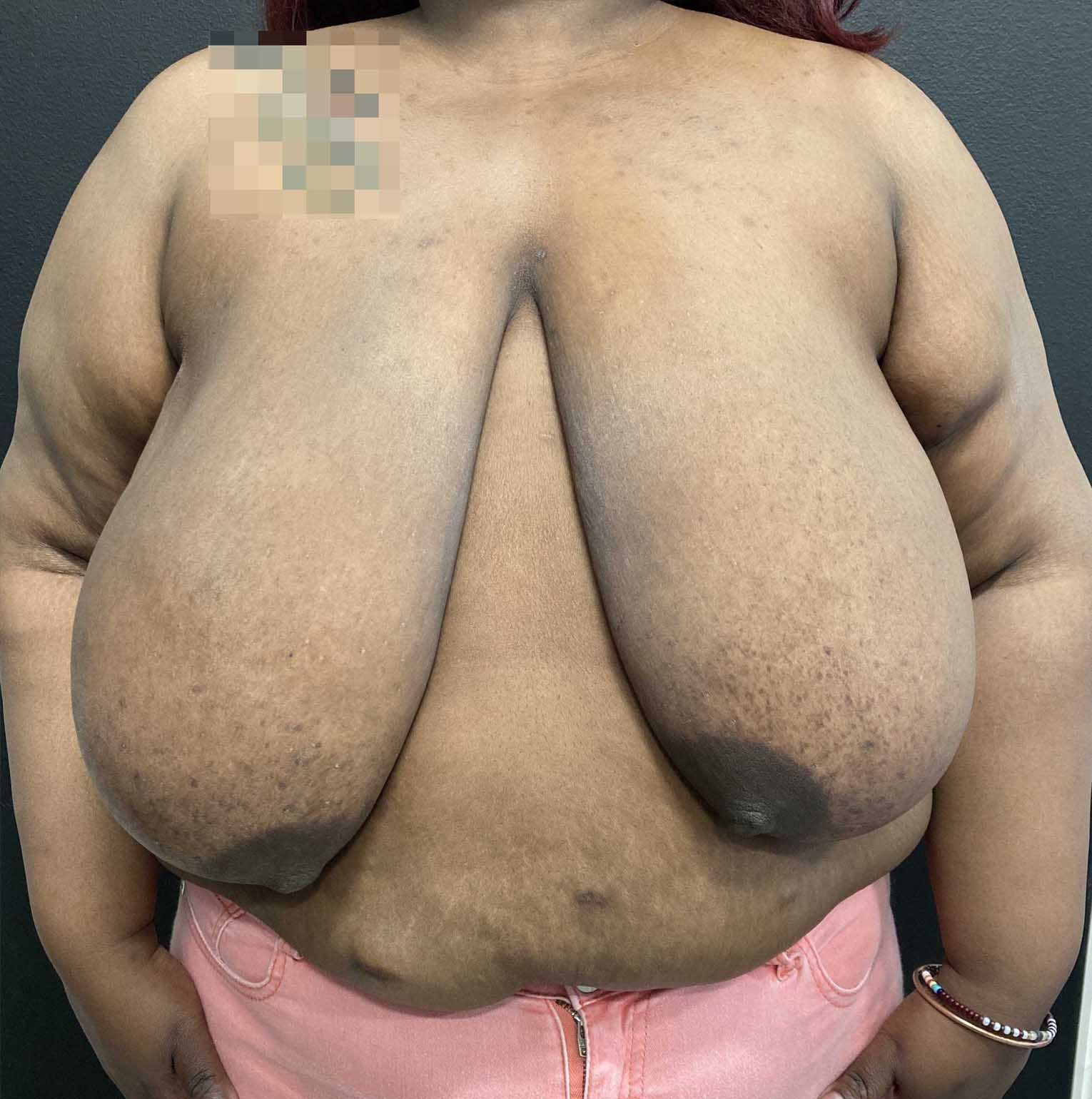
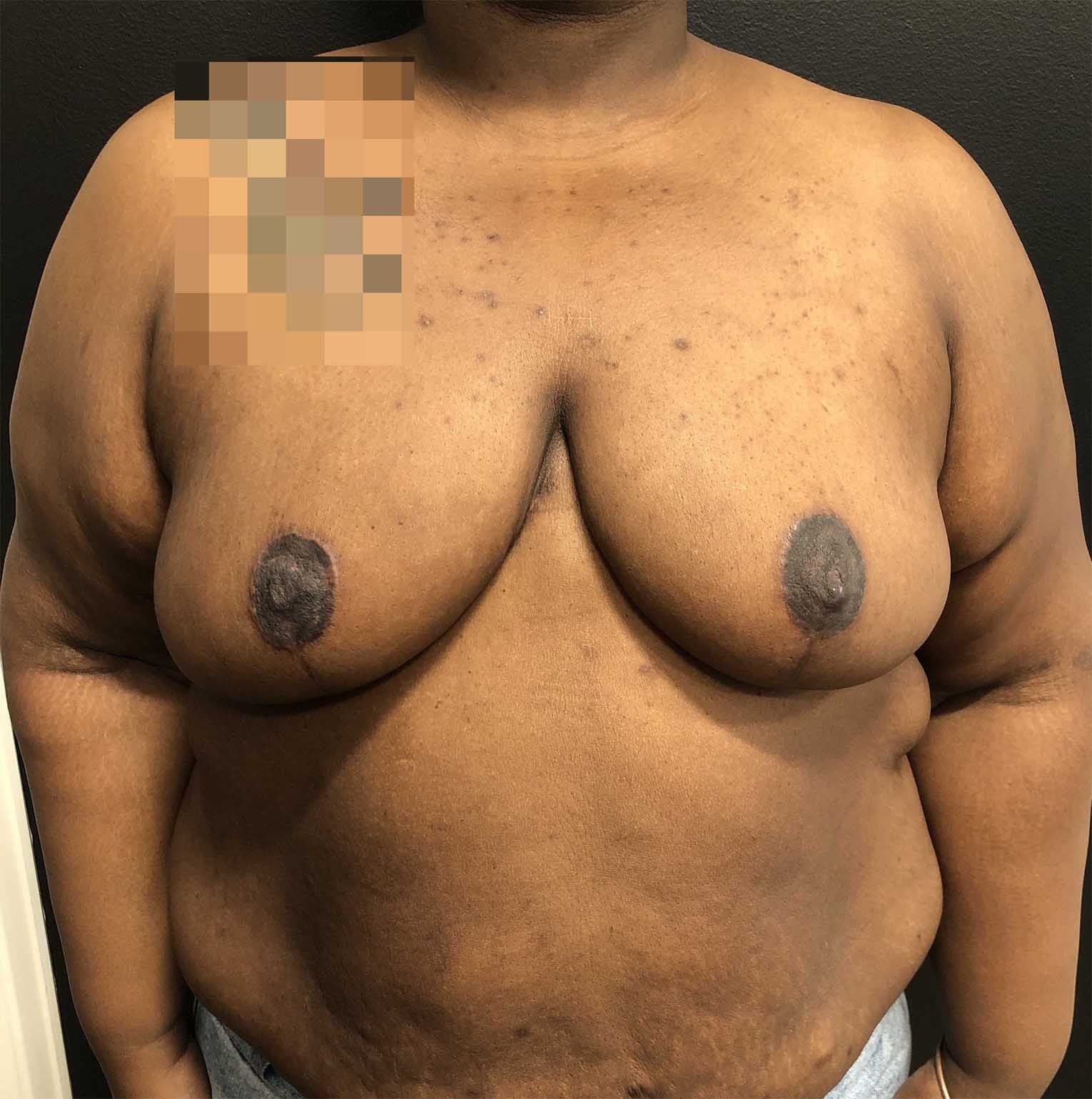
Does Dr. Jandali Perform Breast Reduction in Women with a BMI Over 40?
The answer is often yes.
Unlike many practices that use a strict BMI cutoff, Dr. Shareef Jandali evaluates each patient individually.
BMI is certainly an important part of surgical planning because it correlates with certain complications. However, it is only one piece of the overall picture.
Patients with a higher BMI may still be excellent surgical candidates if they are otherwise medically optimized.
Every patient undergoes a comprehensive evaluation that includes:
- Overall medical history
- Heart and lung health
- Diabetes control
- Smoking and nicotine exposure
- Skin health
- Ability to heal
- Functional symptoms
- Goals and expectations
For many women, the physical limitations caused by extremely large breasts actually make weight loss much more difficult. Chronic pain often prevents regular exercise, creating a frustrating cycle:
Large breasts → pain → inability to exercise → difficulty losing weight → continued symptoms.
Breast reduction can often help break that cycle.
We Encourage Weight Loss Whenever Possible
One important point is worth emphasizing.
Dr. Jandali does not recommend avoiding weight loss before surgery.
Whenever possible, achieving a healthier weight can:
- Reduce anesthesia risks
- Lower wound-healing complications
- Improve cosmetic outcomes
- Reduce infection risk
- Improve long-term health
- Sometimes decrease the amount of tissue requiring removal
Patients who are actively losing weight are often encouraged to continue if they are making meaningful progress.
However, there are many women who have reached a plateau despite making tremendous efforts.
Some have:
- Lost significant weight already
- Regained weight after bariatric surgery
- Been unable to tolerate GLP-1 medications
- Been denied insurance coverage for GLP-1 medications
- Tried multiple supervised weight-loss programs
- Lived with symptomatic macromastia for decades
For these patients, waiting indefinitely for an ideal BMI may simply delay treatment without improving quality of life.
Who May Still Be a Candidate Despite a High BMI?
Rather than focusing exclusively on BMI, Dr. Jandali considers the entire clinical picture.
Potential candidates generally should have:
Medical clearance from their primary care physician
This helps ensure any underlying medical conditions have been appropriately evaluated and optimized before surgery.
Well-controlled diabetes
Poorly controlled diabetes significantly increases wound-healing complications.
Patients with diabetes should have an optimized hemoglobin A1c before surgery.
No nicotine exposure
Smoking, vaping, nicotine pouches, patches, gum, and other nicotine products substantially reduce blood flow and dramatically increase healing complications.
Patients must be nicotine-free before surgery.
Healthy breast skin
Any active fungal infections or severe skin irritation beneath the breasts should be treated before surgery.
Large breasts commonly trap moisture, leading to recurrent yeast infections. These can usually be managed before surgery to reduce postoperative infection risk.
Understanding of the increased risks
Patients should fully understand that obesity does increase certain complications compared with women at a lower BMI.
Having a higher BMI does not automatically prevent surgery, but it does require thoughtful planning, optimization, and realistic expectations.
What Are the Benefits of Breast Reduction in Women with Obesity?
Despite the increased surgical risks, the potential benefits can be life-changing.
Many patients report immediate improvement in:
- Neck pain
- Shoulder pain
- Upper back pain
- Headaches related to muscle tension
- Exercise tolerance
- Ability to find properly fitting clothing
- Self-confidence
- Sleep quality
- Hygiene beneath the breasts
- Daily comfort
Perhaps most importantly, many women become significantly more active after surgery because they are no longer carrying several pounds of excess breast tissue on the front of their chest.
For some patients, breast reduction becomes the first step—not the last step—in a healthier lifestyle.
Rather than preventing weight loss, reducing the physical burden of excessively large breasts may make regular exercise and continued weight loss more achievable.
Why Do Many Plastic Surgeons Have BMI Cutoffs for Breast Reduction?
One of the most common questions patients ask is:
“Why did another surgeon tell me I’m not a candidate because of my BMI?”
The answer is that body mass index is associated with an increased risk of certain surgical complications. As BMI increases, studies generally show higher rates of:
- Delayed wound healing
- Minor wound separation
- Infection
- Fat necrosis
- Fluid collections (seromas)
- Longer operative times
- Anesthesia-related complications
- Blood clots (deep vein thrombosis and pulmonary embolism)
Because of these increased risks, many plastic surgeons and many hospitals establish BMI guidelines. Some practices stop offering breast reduction surgery above a BMI of 35, while others use a BMI of 40. These thresholds are practice-specific rather than universal national rules, and they may differ between surgeons and hospitals.
These policies are intended to improve patient safety. However, they also mean that some women with severe symptoms are unable to receive treatment despite years of pain and disability.
At Jandali Plastic Surgery, Dr. Shareef Jandali believes that BMI should be considered alongside the patient’s overall health rather than as the only deciding factor.
BMI Is Only One Part of Surgical Risk
Body mass index is useful because it correlates with surgical risk across large populations. However, BMI alone cannot accurately predict how an individual patient will heal.
For example, two women with the same BMI of 43 may have very different risk profiles.
One patient may have:
- Well-controlled blood pressure
- Excellent diabetes control
- No nicotine exposure
- Normal heart function
- Active lifestyle
- No history of wound healing problems
Another patient with the same BMI may have:
- Poorly controlled diabetes
- Active smoking
- Significant heart disease
- Chronic steroid use
- Untreated skin infections
Although their BMIs are identical, their surgical risks are not.
This is why every consultation at Jandali Plastic Surgery includes a comprehensive review of your overall health—not just your BMI.
Weight Loss Is Encouraged—But It Is Not Always Achievable
One of the biggest misconceptions about obesity is that everyone can simply lose the weight if they try hard enough.
In reality, obesity is a complex chronic disease influenced by:
- Genetics
- Hormonal regulation
- Metabolism
- Medications
- Medical conditions
- Sleep disorders
- Stress
- Lifestyle
- Previous pregnancies
- Age
Many women seeking breast reduction have already spent years attempting to lose weight.
Patients commonly tell us they have tried:
- Physician-supervised weight loss
- Personal trainers
- Nutritionists
- Weight Watchers
- Keto
- Mediterranean diet
- Low-carbohydrate diets
- Intermittent fasting
- OrangeTheory
- CrossFit
- GLP-1 medications
- Bariatric surgery
Some patients have successfully lost 50, 75, or even more than 100 pounds but continue to suffer from disproportionately large breasts.
Others plateau despite doing everything they reasonably can.
Dr. Jandali recognizes these realities and does not assume that every patient can simply continue losing weight indefinitely.
What If Insurance Would Not Cover Ozempic®, Wegovy®, or Other GLP-1 Medications?
GLP-1 medications have transformed medical weight loss for many patients.
Unfortunately, they are not accessible for everyone.
Many insurance companies:
- Deny coverage
- Require lengthy prior authorization
- Limit eligibility
- Stop coverage after a certain period
- Require high out-of-pocket costs
Other patients cannot tolerate the medications because of gastrointestinal side effects or other medical concerns.
Patients should not feel that unsuccessful treatment with GLP-1 medications automatically disqualifies them from breast reduction surgery.
Instead, Dr. Jandali considers your complete medical history and your overall surgical risk profile.
Breast Reduction Can Help Patients Become More Active
Many women feel trapped in a frustrating cycle.
Large, heavy breasts make physical activity painful.
Running hurts.
Walking causes breast pain.
Strength training becomes uncomfortable.
Sports bras fail to provide adequate support.
As activity decreases, weight loss becomes even more difficult.
By reducing several pounds of breast tissue, many women experience significant improvements in comfort during exercise.
Although breast reduction is not a weight-loss operation, it may make regular physical activity substantially easier, allowing patients to continue improving their overall health after surgery.
Understanding the Increased Surgical Risks
Patients with a higher BMI deserve honest discussions—not fear.
Dr. Jandali believes informed patients make better decisions.
Although many women heal without major problems, obesity does increase the likelihood of certain complications.
These include:
Delayed wound healing
The lower portion of the breast incision experiences the greatest tension after surgery. Higher BMI patients have a greater chance of small areas taking longer to heal.
Fortunately, many of these wounds can be managed with local wound care without requiring another operation.
Infection
Excess skin folds, moisture retention, diabetes, and reduced tissue oxygenation may increase infection risk.
Optimizing blood sugar, eliminating nicotine, and treating any fungal infections before surgery helps reduce this risk.
Fat necrosis
Fat necrosis occurs when a small portion of breast fat loses its blood supply and becomes firm.
Most cases resolve without surgery, although some require monitoring or removal.
Blood clots
Patients with obesity have a higher baseline risk of developing blood clots.
Dr. Jandali utilizes multiple strategies to reduce this risk, including:
- Preoperative heparin injection
- Early postoperative walking
- Compression devices during and after surgery
- Careful patient selection
- Individualized blood clot prevention strategies when appropriate
Anesthesia Risks
Higher BMI may increase the complexity of anesthesia.
For this reason, careful medical clearance and optimization before surgery are extremely important.
Why Free Nipple Grafts Are More Common in Patients with Very Large Breasts
One important discussion during consultation involves the possibility of requiring a free nipple graft.
In traditional breast reduction surgery, the nipple remains attached to its blood supply while being repositioned higher on the breast.
However, in women with extremely large breasts, this blood supply may become unreliable.
Several measurements influence this decision, including:
- Sternal notch-to-nipple distance
- Nipple-to-inframammary fold distance
- Overall breast volume
- Degree of breast drooping (ptosis)
- Skin quality
- Expected distance the nipple must be moved
When these distances become very long, the risk of inadequate blood flow to the nipple increases.
Rather than risking partial or complete nipple loss, Dr. Jandali may recommend performing a free nipple graft when it offers the safest reconstructive option.
A free nipple graft involves removing the nipple-areola complex and grafting it back onto the breast after the excess tissue has been removed and the breast has been reshaped.
Although this technique is extremely reliable for preserving nipple viability, patients should understand its tradeoffs.
These include:
- Permanent loss of nipple sensation
- Inability to breastfeed
- Flattening of the nipple over time
- Possible pigment changes
- Small risk of partial graft loss
Not every woman with a high BMI requires a free nipple graft.
Likewise, some women with a lower BMI but extremely large breasts may still benefit from this approach.
The decision is based primarily on breast anatomy and blood supply rather than BMI alone.
Is Breast Reduction Still Worth It for Women with Obesity?
For many patients, the answer is yes.
Although higher BMI increases surgical risks, the improvement in quality of life can be profound.
Patients frequently report improvements in:
- Neck pain
- Shoulder pain
- Upper back pain
- Headaches
- Exercise tolerance
- Sleep quality
- Clothing options
- Confidence
- Hygiene
- Daily activities
Many patients tell us they wish they had pursued surgery years earlier.
The decision ultimately involves balancing increased surgical risk against years of ongoing pain and disability.
That discussion should occur between you and an experienced board-certified plastic surgeon who understands both the risks and the potential benefits.
Why Choose Dr. Shareef Jandali for Breast Reduction in Connecticut?
Dr. Shareef Jandali is a board-certified plastic surgeon who routinely performs medically necessary breast reduction surgery for women throughout Connecticut.
Patients travel from communities including:
- Trumbull
- Fairfield
- Westport
- Weston
- Easton
- Monroe
- Shelton
- Stratford
- Milford
- Bridgeport
- Norwalk
- Stamford
- Greenwich
- Danbury
- Newtown
- Bethel
- Waterbury
- Meriden
- New Haven
- Orange
- Woodbridge
- Hamden
- Hartford
- Farmington
- Glastonbury
- Bristol
- Middletown
- New London
- Norwich
- Torrington
Rather than relying solely on BMI, Dr. Jandali evaluates each patient individually, emphasizing medical optimization, patient education, realistic expectations, and surgical safety.
Frequently Asked Questions About Breast Reduction and High BMI
Can I get breast reduction surgery if my BMI is over 40 in Connecticut?
Yes, some women with a BMI over 40 may still be candidates. Eligibility depends on your overall health, medical clearance, diabetes control if applicable, nicotine status, and an individualized risk assessment rather than BMI alone.
Will insurance cover breast reduction if I’m obese?
Many insurance companies do not use BMI alone to determine medical necessity. Coverage often depends on symptoms, documentation of conservative treatment, physical examination findings, and the amount of breast tissue expected to be removed. However, some insurers or hospitals may have additional requirements.
Can I have a breast reduction if I can’t lose weight?
Possibly. Many women have tried multiple weight-loss methods without achieving their goal. If you are medically optimized and understand the increased risks, breast reduction may still be an appropriate option.
I tried Ozempic and Wegovy but didn’t lose enough weight. Can I still have breast reduction?
Yes. Previous treatment with GLP-1 medications does not automatically determine whether you are a surgical candidate. Your consultation focuses on your overall health and risk profile.
Should I lose weight before breast reduction?
Whenever possible, losing weight before surgery is encouraged because it may reduce complications and improve surgical outcomes. However, not every patient is able to achieve a target weight despite significant effort.
What BMI is too high for breast reduction?
There is no universal BMI cutoff. Many surgeons use thresholds between 35 and 40, while others evaluate patients individually. Dr. Jandali considers BMI alongside your complete medical history rather than using it as the only criterion.
Can breast reduction help me lose weight afterward?
Breast reduction is not a weight-loss procedure. However, many women find that exercise becomes much more comfortable after surgery, making it easier to maintain an active lifestyle.
Will I need a free nipple graft because of my size?
Not necessarily. The need for a free nipple graft depends primarily on your breast anatomy, including nipple position, breast volume, and blood supply—not BMI alone. Dr. Jandali will discuss whether this technique may provide the safest outcome during your consultation.
Is breast reduction safe if I have diabetes?
Many patients with diabetes successfully undergo breast reduction surgery. Good blood sugar control, often assessed with a recent hemoglobin A1c, is an important part of reducing surgical risks.
I was told by another surgeon that my BMI is too high. Should I get another opinion?
If you have persistent symptoms from excessively large breasts, obtaining a second opinion from a board-certified plastic surgeon who evaluates patients individually can help you better understand your options, the associated risks, and whether surgery may still be appropriate in your specific situation.
Continue Exploring Breast Reduction
To learn more about your options, you may also find these educational resources helpful:
Schedule a Consultation
If excessively large breasts are affecting your daily life, a consultation can help determine whether breast reduction surgery may be appropriate for you—even if you’ve previously been told your BMI is too high.
Dr. Shareef Jandali is a board-certified plastic surgeon who evaluates each patient individually, balancing safety with quality-of-life improvements. Patients travel from throughout Connecticut, including Fairfield County, New Haven County, Hartford County, Litchfield County, Middlesex County, New London County, Tolland County, Windham County, and beyond, for comprehensive breast reduction evaluation.
To schedule a consultation with Dr. Shareef Jandali, contact Jandali Plastic Surgery:
Jandali Plastic Surgery
5520 Park Avenue, Suite WP-2-300
Trumbull, CT 06611
Phone: (203) 374-0310
Medically Reviewed By
Shareef Jandali, MD
Board-Certified Plastic Surgeon
Jandali Plastic Surgery
Last reviewed: July 2026
References
Include your standard reference list with authoritative sources such as:
- American Society of Plastic Surgeons (ASPS)
- American Society for Aesthetic Plastic Surgery (The Aesthetic Society)
- American Diabetes Association
- ACOG guidance where relevant
- Peer-reviewed studies on obesity and reduction mammaplasty outcomes (e.g., Plastic and Reconstructive Surgery, Annals of Plastic Surgery)
- PubMed-indexed literature evaluating BMI and complication rates after reduction mammaplasty
Medical Disclaimer
This article is intended for educational purposes only and should not be considered personalized medical advice. Every patient has unique anatomy, medical conditions, goals, and risk factors. Decisions regarding breast reduction surgery should be made after a comprehensive consultation with a board-certified plastic surgeon.