
Start with our original Breast Reduction Overview Series
Introduction: Why Breast Reduction Scars Don’t Have to Be a Major Concern
For many women considering breast reduction surgery, the most common hesitation isn’t about recovery or even insurance approval — it’s about scars.
At Jandali Plastic Surgery in Trumbull, CT, we want our patients to feel confident knowing that breast reduction scars can be beautifully minimized and refined with advanced techniques. Dr. Shareef Jandali, a board-certified plastic surgeon who performs over 100 breast reductions every year, uses meticulous closure methods, layered suturing, and post-surgical scar therapy to achieve the smoothest, most natural results possible.
While every surgery leaves a scar, the goal is an elegant, flat, barely noticeable line that fades into your natural skin tone — not a thick or raised mark.
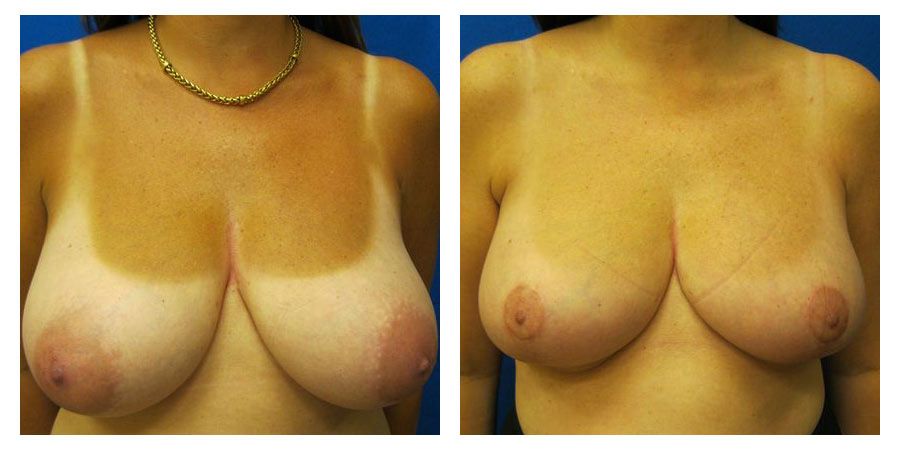
Visit our Before and After Breast Reduction Gallery
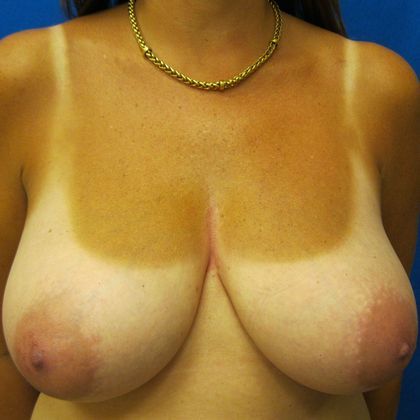
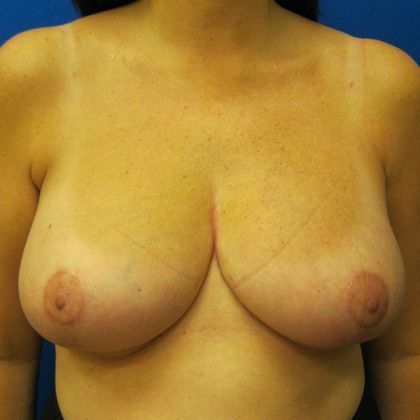
Visit our Before and After Breast Reduction Gallery
Understanding the Types of Breast Reduction Scars
The pattern and length of scars depend on your anatomy and the degree of tissue reduction needed. Dr. Jandali customizes the incision for each patient based on breast size, skin elasticity, and desired lift.
1. Vertical (Lollipop) Scar
- Incision around the areola and vertically down to the breast crease.
- Ideal for moderate reductions and lifts.
- Heals with a single vertical line that often fades into a thin, hairline mark.
2. Inverted-T (Anchor) Scar
- Around the areola, vertically down, and along the breast crease.
- Used for larger reductions or significant sagging.
- The crease incision is hidden beneath the breast and often becomes nearly invisible with proper care.
At your consultation, Dr. Jandali will review before-and-after photos of patients with scars similar to what you can expect based on your unique anatomy.
How Dr. Jandali Minimizes Scarring During Surgery
Every step of the surgery is designed to minimize tension on the skin and optimize healing.
1. Layered Internal Suturing
Dr. Jandali closes each incision in multiple layers — deep tissue, dermis, and skin — using fine absorbable sutures. This technique:
- Prevents spreading of scars over time
- Reduces surface tension
- Supports even healing and smooth skin edges
2. Meticulous Skin Edge Alignment
Even a millimeter of misalignment can cause visible irregularities. Dr. Jandali ensures perfect edge approximation, which is critical for nearly invisible scars.
3. Precision Around the Areola
The circular incision around the areola is closed with fine sutures to blend the lighter and darker skin tones naturally.
4. Scar Placement and Concealment
All incisions are positioned strategically:
- Around natural skin color transitions
- Hidden under bras or swimsuits
- In the crease beneath the breast
Preventing Thick or Raised Scars: Our Postoperative Protocol
At Jandali Plastic Surgery, we don’t just rely on surgical technique — we actively manage scars in the months after surgery to ensure optimal fading.
1. Silicone Gel and Silicone Sheeting
We start all patients on a medical-grade silicone regimen once incisions have sealed (usually 2–3 weeks post-op). Silicone hydrates the scar and prevents raised or red tissue formation.
2. Scar Massage
Gentle massage after 3–4 weeks helps soften tissue and improve collagen alignment. Our team provides a step-by-step guide for safe massage techniques.
3. Sun Protection
We emphasize strict sun avoidance for at least 6–12 months. UV exposure can darken scars permanently, especially on the décolletage.
4. Laser Therapy (Optional)
For patients prone to redness or pigmentation, we offer fractional laser treatments or IPL to accelerate fading and smooth texture.
5. Corticosteroid Injections (for Hypertrophic Scars)
In rare cases where scars become raised, small steroid injections flatten and soften the tissue over several weeks.
What Breast Reduction Scars Look Like Over Time
Week 1–2: Incisions are closed with surgical tape or steri-strips. Slight redness and firmness are normal.
Month 1–3: Scars may look pink or slightly raised as new collagen forms. Continue silicone and massage therapy.
Month 6–12: Redness fades; scars flatten and blend into surrounding skin. Most patients can wear low-cut tops confidently by this stage.
Year 2+: Scars are thin, pale, and soft — often barely visible in natural light.
Patients who follow our protocol typically achieve beautifully refined, almost invisible scars, even after larger reductions.
Addressing Common Concerns About Scarring
Will my scars stretch or widen over time?
Not if they’re closed correctly and you follow aftercare. Dr. Jandali’s multi-layer closure and low-tension technique prevent spreading.
Can I use scar creams or oils instead of silicone?
While some over-the-counter creams help hydration, medical silicone remains the gold standard for scar healing.
Can laser or microneedling help old scars?
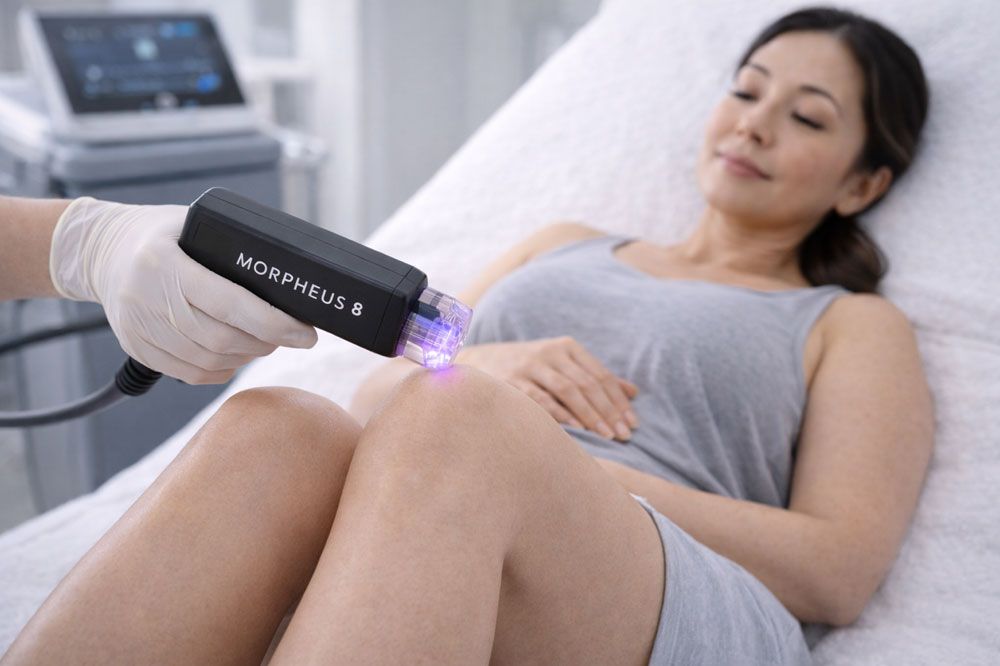
Yes — even years later, laser resurfacing, microneedling, or radiofrequency treatments can refine older scars.
Do darker skin tones scar differently?
Patients with more melanin may have a higher risk of hyperpigmentation or keloids. We use preventive steroid and silicone therapy to minimize this risk.
Free Nipple Grafts and Areola Shaping in Breast Reduction
For patients with very large or low breasts, or when the nipple must be repositioned higher than blood flow allows, Dr. Jandali may use a free nipple graft technique.
When Free Nipple Grafts Are Used
- Significant skin excess or large-volume reductions
- Very low nipple position requiring complete repositioning
- Preexisting stretched or enlarged areolas
Benefits
- Allows repositioning to an ideal height
- Enables nipple and areola size reduction
- Provides symmetry correction when breasts are uneven
How Scars Heal Around Free Nipple Grafts
- The areola border incision blends naturally with surrounding pigmentation
- Fine sutures are used to minimize edge visibility
- The area heals flat and blends smoothly after a few weeks
Patients typically describe their results as “natural and lifted”, with incisions hidden within normal breast contours.
Patient Testimonials
“I was nervous about scars before surgery, but Dr. Jandali explained everything. My scars are already fading at just three months, and my breasts look completely natural.”
— L.M., Fairfield, CT
“I had a large reduction and thought the scars would bother me. Now, one year later, they’re thin and almost invisible. I wish I’d done it sooner.”
— K.S., Shelton, CT
Why Scars at Jandali Plastic Surgery Heal So Well
- Meticulous surgical technique with layered closure
- Comprehensive postoperative scar management protocol
- Board-certified plastic surgeon performing 100+ breast reductions per year
- Yale-affiliated surgical facilities for safety and precision
- Dedicated follow-up and access to advanced laser and silicone therapy options
Why Choose Dr. Shareef Jandali for Breast Reduction Surgery
- Board-Certified Plastic Surgeon with 15+ years of experience
- Performs over 100 breast reductions every year
- Operates at Bridgeport Hospital and Park Avenue Medical Center (Yale-affiliated ASC)
- Hundreds of 5-star Google reviews from patients across Connecticut
- Expert in both aesthetic and reconstructive breast surgery
“My breast reduction changed my life. The scars are barely visible, and the relief from pain is unbelievable. Dr. Jandali and his team were exceptional.”
— S.R., Westport, CT
Serving Patients Across Fairfield County
We provide breast reduction and scar revision expertise to women from:
Trumbull, Fairfield, Bridgeport, Stratford, Milford, Shelton, Norwalk, Westport, Weston, Wilton, Easton, Monroe, Derby, Ansonia, Seymour, Oxford, Newtown, Bethel, and Southbury.
Patients also travel from Stamford, Greenwich, and New Haven County for Dr. Jandali’s advanced surgical expertise.
Call to Action
If you’re considering a breast reduction in Connecticut and are concerned about scars, schedule a consultation with Dr. Shareef Jandali at Jandali Plastic Surgery. You’ll learn exactly how your incisions will be placed, how we minimize scarring, and what to expect during recovery.
Jandali Plastic Surgery
5520 Park Ave, Suite WP-2-300, Trumbull, CT 06611
203-374-0310
Related Articles in the Advanced Breast Reduction Series
- Scars After Breast Reduction — How We Minimize, Heal, and Refine Them
- Teen Breast Reduction: Safety, Confidence, and Insurance Coverage
- Recovery Timeline After Breast Reduction Surgery
- Post-Pregnancy & Post-Weight-Loss Breast Reduction (Ozempic, Wegovy, Mounjaro)
- Breast Reduction vs. Breast Lift — Which Is Right for You?
- Breast Reduction After Prior Augmentation
- Breast Reduction for Older Women — Comfort, Posture, and Confidence
- Combining Breast Reduction with Liposuction — Enhanced Contour & Shape
- Breast Reduction and Asymmetry Correction
- Insurance-Covered Breast Reduction in Connecticut — What to Know
- Breast Reduction for Athletes
- Breast Reduction and Mental Health
- Breast Reduction and Back, Neck, and Shoulder Pain
- The Jandali Advantage — Why Experience and Volume Matter
- Breast Reduction and Bra Fitting After Surgery
- Revision Breast Reduction Surgery
- Nipple & Areola Shaping, Reduction, and Free Nipple Grafts
- Myths and Misconceptions About Breast Reduction Surgery
- Choosing the Right Size After Breast Reduction